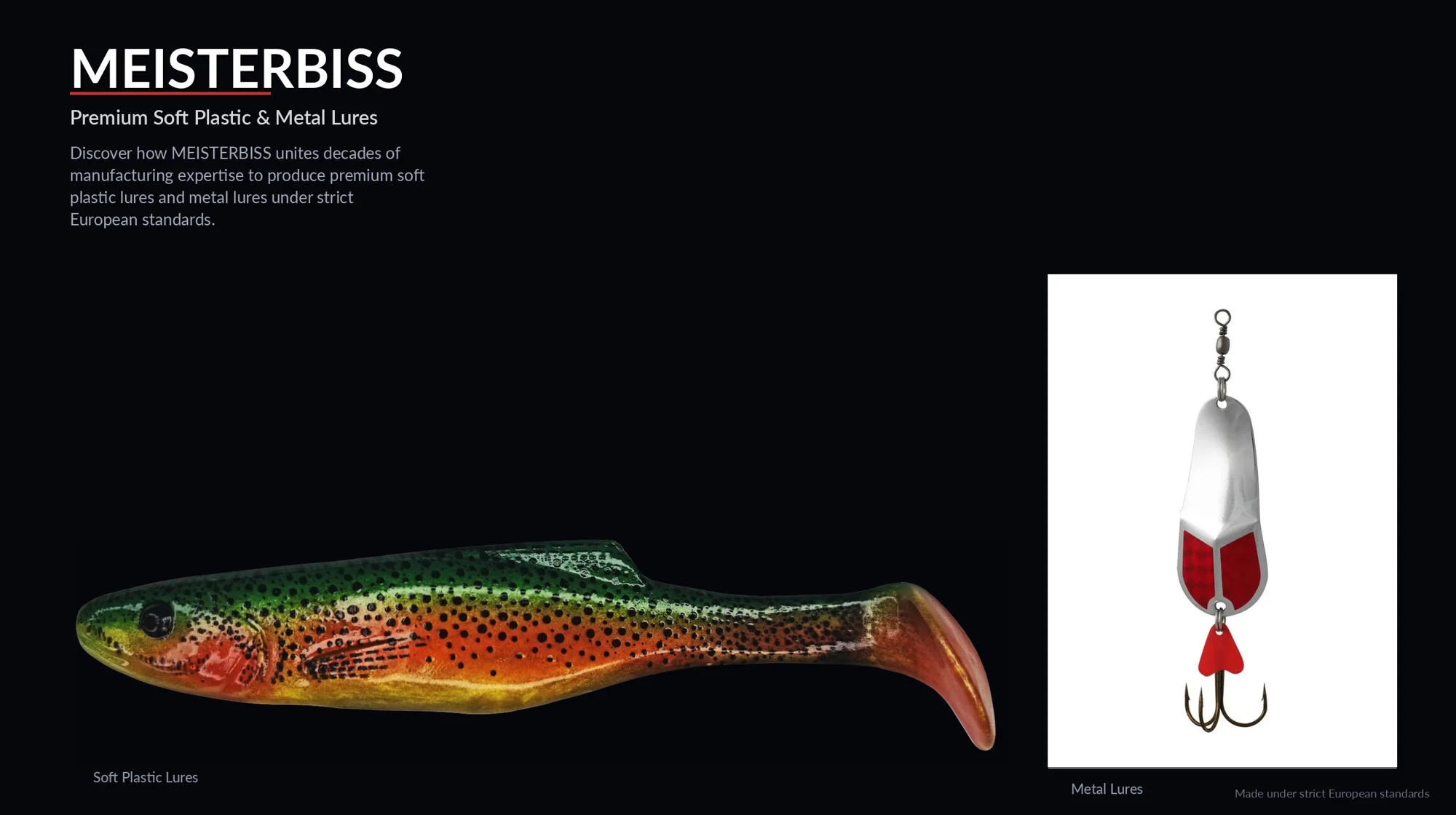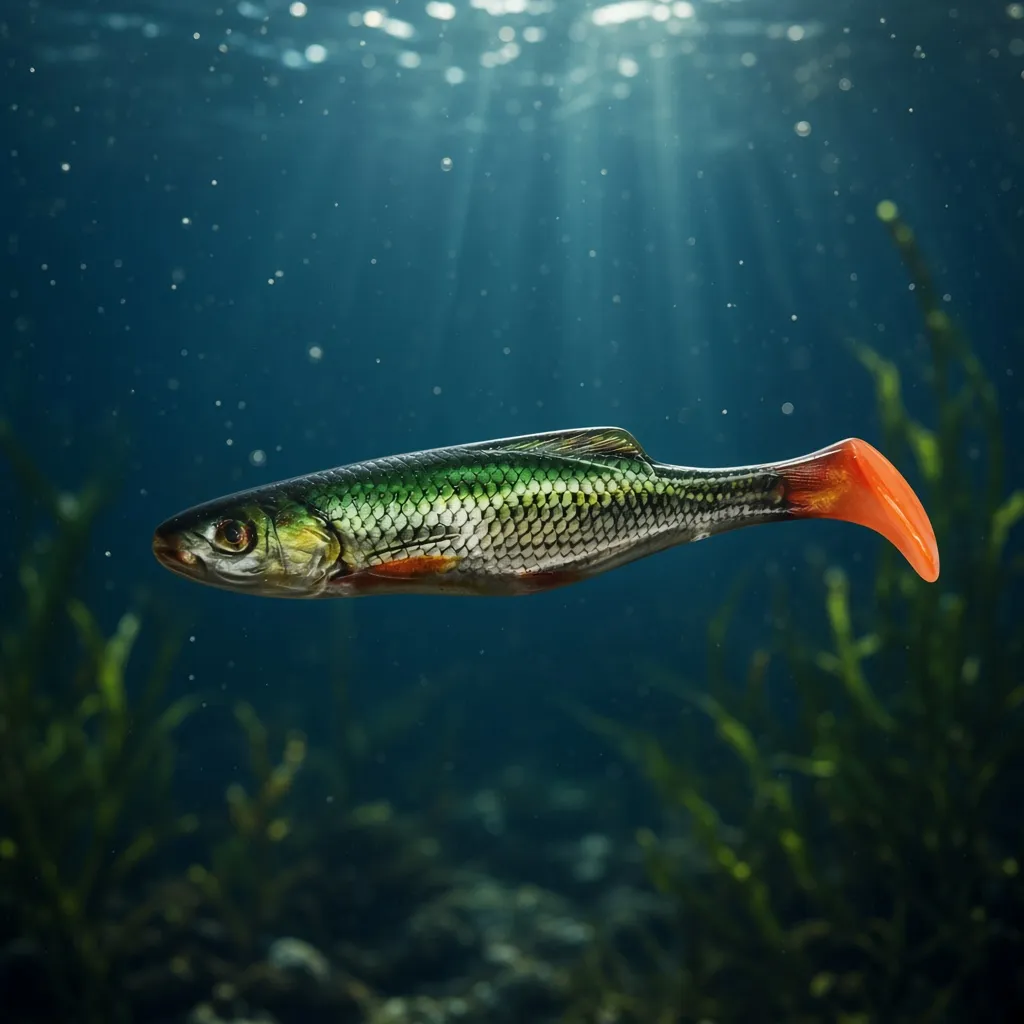
In the demanding world of modern predatory angling, soft plastic lures have completely redefined how anglers approach rivers, lakes, and coastal waters. While traditional metal lures like a spoon or spinner still have their place in a modern tackle box, premium soft plastic lures offer unparalleled realism and action. No longer is a simple piece of plastic sufficient to deceive highly pressured sport fish like perch, zander, and pike; today, the discipline demands absolute technical perfection. At MEISTERBISS, we approach the development of these essential tools with a focus on advanced engineering and repeatable industrial precision. For B2B tackle retailers and serious anglers alike, understanding how these premium soft plastic lures are manufactured is key to recognizing their superior durability, consistent hydrodynamics, and unmatched catch rates on the water.
The lifecycle of every MEISTERBISS lure begins in the laboratory with the precise formulation of the liquid plastic compound, commonly referred to as plastisol. Unlike standard plastic products, soft plastic lures require a highly specialized polymer matrix that balances extreme flexibility with structural resilience. We utilize advanced thermo-plastic polymers that are completely free from harmful phthalates, ensuring environmental compatibility without compromising the performance of the lure on a jig head. During the silicone compounding phase, the raw material is heated under strict temperature control to prevent thermal degradation of the polymer chains. In this molten state, specialized additives are introduced into the liquid matrix. This includes high-grade scent attractants, amino acids, and micro-salt crystals. Integrating these sensory triggers directly into the raw compound ensures that the scent and taste disperse slowly and continuously over hours of intensive jigging and retrieving.
A critical aspect of the compounding process is density regulation, which directly influences how soft plastic lures behave under water. By adjusting the ratio of micro-salt crystals and specialized density-reducing agents, MEISTERBISS engineers can precisely control whether a specific lure model is heavy-sinking, neutrally buoyant, or highly floating. For instance, a lure designed for deep-water jigging needs a denser compound to sink quickly and maintain a direct connection to the angler's fluorocarbon leader. Conversely, a soft lure designed for finesse techniques, such as the Ned rig, requires high buoyancy so that the tail stands upright off the bottom during pauses in the retrieve.
Before a compound can be molded, the physical shape of the lure must undergo a extensive computer-aided design (CAD) process. At MEISTERBISS, hydrodynamic simulation software is employed to analyze how water flows around the lure's body during different retrieve speeds. Every single rib, curve, and tail angle is calculated to produce a distinct vibration pattern. The design of the paddle tail, for example, determines the frequency and amplitude of the tail action. A wider paddle produces a slow, hard-thumping vibration that mimics an injured baitfish, ideal for a steady retrieve. A narrow, pin-tail design produces high-frequency micro-vibrations that trigger cautious predators during a fast twitch.
Once the CAD model is perfected, the design is translated into high-grade aircraft aluminum molds using ultra-precise CNC milling machines. At MEISTERBISS, mold-engineered precision is paramount. The tolerances of these molds are kept within micrometers to ensure that the final soft plastic lures exhibit absolutely zero flashing—the unwanted thin sheets of plastic that can form along parting lines. The interior surfaces of our CNC-milled molds are polished to a mirror finish or given specific micro-textures. A mirror finish yields a perfectly glossy, transparent lure body that maximizes light transmission, while a micro-textured surface creates a matte finish that diffuses light, mimicking the natural slime coat of real baitfish.
The actual manufacturing of MEISTERBISS lures relies on automated high-pressure injection molding rather than gravity feeding or manual pouring. In our modern facilities, the liquid plastisol compound is injected into the temperature-controlled CNC molds under high pressure. This industrial production method guarantees that the liquid plastic completely fills every intricate detail of the mold, including ultra-thin ribbing and delicate tail segments, without leaving air bubbles. Automated temperature regulation during the injection cycle is critical; if the mold is too cold, the plastic will solidify prematurely, creating weak shear lines. By maintaining absolute control over temperature, pressure, and cooling cycles, we achieve a level of consistency that manual methods cannot replicate.
To create highly realistic baitfish imitations, MEISTERBISS utilizes multi-chamber injection systems. This technique allows us to inject two or three differently colored compounds into the mold simultaneously. For example, we can produce a lure with a dark back for silhouette contrast, a semi-transparent side featuring reflective glitter, and a bright UV-active belly. Because the different colors are injected while the compounds are still at their optimal bonding temperatures, they fuse perfectly at the molecular level. This prevents the layers from peeling apart even after multiple strikes from sharp-toothed predators. It also ensures that the transition between colors is clean and sharp, without any bleeding.
Visual triggers are fundamental to the success of soft plastic lures, especially in deep or turbid waters where light penetration is minimal. At MEISTERBISS, we incorporate advanced UV-active pigments directly into the polymer matrix during the silicone compounding phase. These pigments absorb invisible ultraviolet light and re-emit it as visible light, making the lure stand out in the dark depths. We carefully engineer our color profiles to match specific water conditions. For crystal-clear lakes, natural forage imitations with subtle glitter are prioritized. For stained rivers, highly reactive UV colors are utilized to maximize visibility during a jigging or twitch retrieve. By embedding these pigments within the material rather than applying them as a surface paint, the visual attraction remains active for the entire lifespan of the lure.
Consistency is the cornerstone of B2B retail success and angler trust. A soft plastic lure that performs perfectly on one trip must perform identically when replaced with a new one from the same package. At MEISTERBISS, every production run undergoes rigorous quality control protocols. Automated optical sensors inspect each lure for dimensional accuracy, weight consistency, and color distribution. Sample lures from every batch are subjected to tensile strength tests to ensure the polymer chains have cross-linked correctly during the curing phase. This guarantees that the soft plastic lures can withstand the force of hard hooksets, slide securely onto a jig head without tearing, and survive the aggressive attacks of large pike and zander.
One of the greatest challenges in manufacturing premium soft plastic lures is balancing durability with softness. A lure that is too soft will tear after a single fish, while a lure that is too hard will lack the natural tail action and vibration needed to trigger strikes. Through our proprietary silicone compounding techniques, MEISTERBISS has achieved the ideal synthesis. Our lures remain incredibly supple, allowing the tail to vibrate at the slowest retrieve speeds, yet they possess a highly resilient molecular structure that resists tearing. This durability ensures that anglers spend more time fishing and less time replacing damaged lures, while retailers can confidently stock a premium product that consistently delivers on its performance promises.
In conclusion, the manufacturing of modern soft plastic lures at MEISTERBISS represents a perfect alignment of material science, mechanical engineering, and angling expertise. By moving away from primitive pouring methods and embracing advanced industrial production, we deliver lures that offer unmatched consistency, lifelike action, and incredible durability. For the modern angler, this means more fish on the bank and complete confidence in their gear. For our B2B partners, stocking MEISTERBISS products means offering a high-performance, precision-engineered brand that fish cannot resist and anglers will return to buy time and time again. As the sport of angling continues to evolve, our commitment to industrial precision ensures that MEISTERBISS remains at the forefront of lure manufacturing excellence.