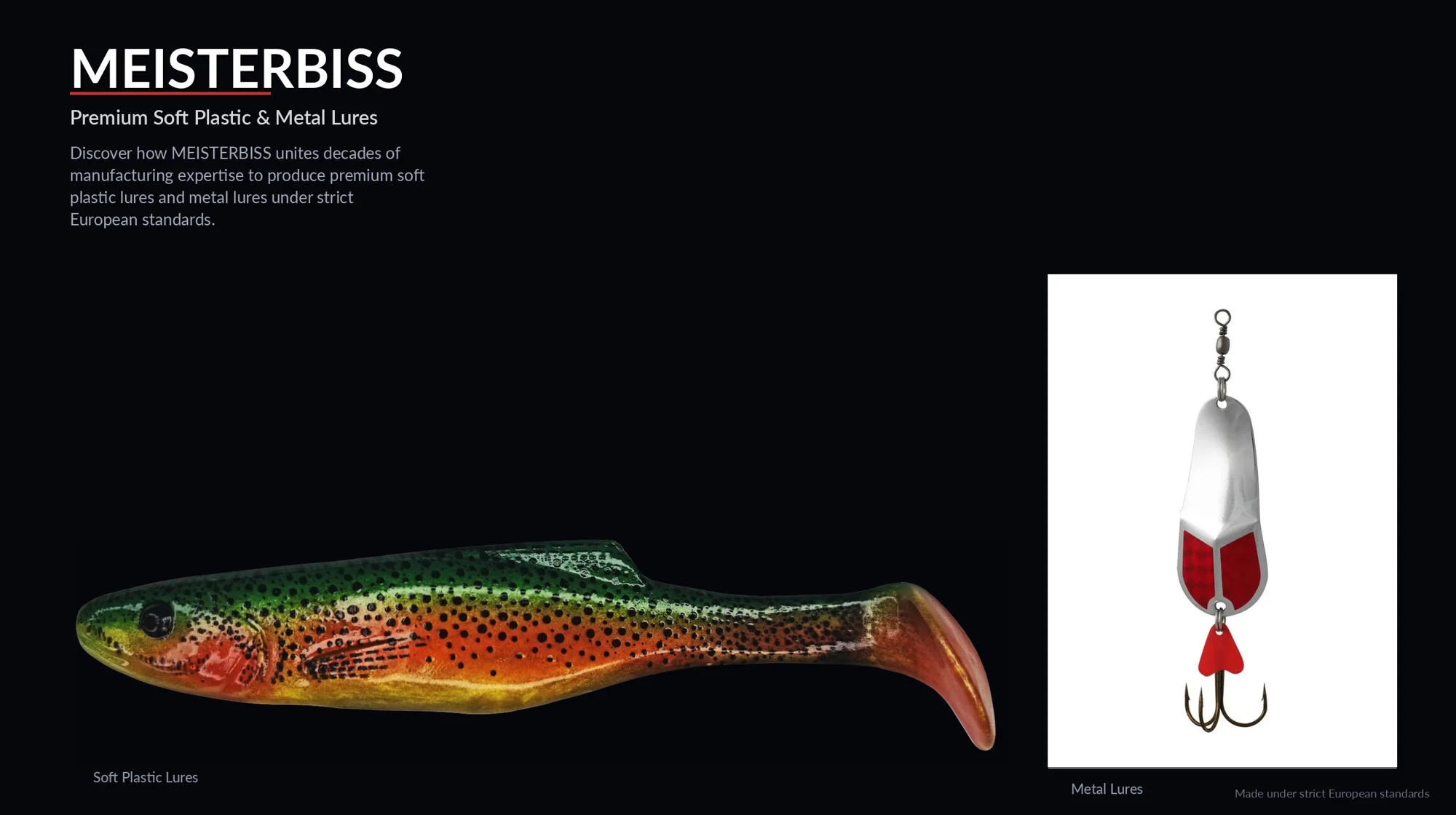
Inline spinners have stood the test of time as some of the most versatile and effective lures in the angling world. Despite the rise of highly complex soft plastics and computerized hardbaits, the fundamental mechanics of inline spinners remain unmatched when it comes to triggering aggressive strikes from a wide variety of predatory fish. At MEISTERBISS, we approach the development of these classic lures with rigorous industrial precision, ensuring that every blade, clevis, and shaft is optimized for maximum hydrodynamic performance. Anglers and retail partners alike recognize that a premium spinner is not just a simple piece of bent wire, but a highly calibrated tool designed to operate in diverse aquatic environments. To truly master the use of inline spinners, one must understand the intricate physics of blade design, the role of flash and vibration, and how retrieve speed dictates the lure's path through the water column.
To understand why inline spinners are so effective, we must look at how predatory fish hunt using visual cues and acoustic-mechanical signals, especially in murky water. The rotation of the spinner blade creates a powerful pressure wave detected by the fish's lateral line, a sensory organ running along its body that detects tiny vibrations. This acoustic pressure is the initial long-range locator that draws a predator’s attention from afar. As the fish moves closer, the visual flash of the rotating blade comes into play, reflecting light in all directions and simulating the glistening scales of a fleeing baitfish. The combination of these two sensory triggers makes inline spinners nearly irresistible to predators like pike, perch, and trout. By utilizing precision-engineered components, MEISTERBISS lures produce a highly consistent harmonic frequency under the water, ensuring that the vibrational output is both distinct and recognizable to nearby predators.
The heartbeat of any inline spinner is the blade's rotation, which is dictated by water resistance and the mechanism that connects the blade to the shaft. This connection is made via a small, U-shaped bracket called a clevis. In cheap lures, the clevis can easily bind or warp, leading to a stalled blade that fails to spin upon entry. MEISTERBISS utilizes mold-engineered, high-tolerance brass clevises that offer incredibly low friction. This ensures that the moment the angler begins a steady retrieve, the blade immediately catches the water and begins rotating. The angle of rotation is a critical factor in how the lure behaves. As water pushes against the blade, it forces it to swing outward from the wire shaft. A high-quality clevis allows the blade to spin smoothly even at ultra-low speeds, preventing the lure from tracking off-center or twisting the line, which is a common frustration among anglers using inferior tackle.
When analyzing blade shapes, they generally fall into two primary categories: round blades and long blades. Round blades, which include classic French and Colorado styles, feature a wide, cup-like profile. This design is engineered to catch a significant amount of water, resulting in a wide angle of rotation that typically ranges between forty-five and sixty degrees from the central shaft. Because the blade swings so wide, it creates an enormous amount of water resistance, or drag. This drag produces a heavy, low-frequency thump that sends powerful vibrations deep into the water column, making it exceptionally easy for fish to locate through their lateral line. Furthermore, the high water resistance of round blades generates significant hydrodynamic lift. This buoyancy allows the angler to retrieve the spinner at very slow speeds while still maintaining blade rotation, keeping the lure in the strike zone longer and allowing it to glide over shallow vegetation or rocky bottoms without snagging.
On the opposite end of the spectrum are long blades, commonly referred to as willow leaf blades. These blades feature a slender, elongated, aerodynamic shape with pointed ends. The hydrodynamics of a long blade are completely different from its round counterpart. Because of its sleek profile, a long blade cuts through the water with minimal resistance, resulting in a much tighter angle of rotation, usually between twenty-five and thirty degrees. This narrow rotation means that long blades produce far less drag and vibration, but they make up for it by rotating at a much higher frequency. The rapid spinning action creates an intense, strobing flash that is highly visible in clear water and bright sunlight, mimicking a fast-swimming prey fish. Because long blades generate very little lift, they are the ideal choice when you need to fish deep in the water column or retrieve the lure at high speeds without it rising to the surface, making them perfect for fast-flowing rivers or deep lake basins.
Choosing between round and long blade inline spinners is a tactical decision based on water clarity, temperature, and target species. In cold water or turbid conditions, fish are lethargic with limited visibility. A spinner with a round blade is superior because it can be fished with a slow retrieve, and its heavy vibration acts as a beacon that guides fish to the lure. Conversely, in warm, clear water, fish are more active and rely heavily on their vision. Here, a long blade spinner excels. It can be retrieved quickly, a technique known as burning, which triggers an instinctive reaction strike from predators before they have time to inspect the lure. B2B retailers should advise their customers to stock both blade types, as having the ability to switch between high-vibration slow-rolling and high-speed flashing is often the key to unlocking a tough bite.
While the blade gets most of the attention, the body of the inline spinner is equally critical to its overall performance. The metal body serves two main purposes: adding casting weight and stabilizing the lure. Without a properly balanced body, the entire spinner would roll over in the water, causing severe line twist and ruining the presentation. Through state-of-the-art industrial production, MEISTERBISS designs weighted bodies with a low center of gravity. These aerodynamic bodies allow for long, accurate casts even in windy conditions, which is crucial for covering large expanses of water. Inside the body, precision-machined beads act as bearings, allowing the clevis and blade to rotate smoothly without wearing down the wire shaft. This balance ensures the lure runs true, maintaining a horizontal posture during retrieve and maximizing hook-ups.
The quality of the flash is heavily dependent on the metallurgy and surface treatment of the spinner blade. Cheap blades often use low-grade plating that tarnishes quickly, losing its reflective qualities after just a few outings. MEISTERBISS utilizes premium brass and stainless steel alloys, subjected to advanced industrial finishing processes. Whether it is a highly polished gold, silver, or copper finish, or a multi-colored painted pattern, the coatings are applied with industrial precision to resist chipping against rocks and teeth. The reflectivity is carefully calibrated; rather than producing a chaotic glare that might spook wary fish, our blades are engineered to emit a natural, flickering flash that resembles the realistic shimmer of prey fish scales. This subtle difference in flash quality can make a massive difference in heavily pressured waters where predators have learned to avoid unnatural presentations.
Durability is a non-negotiable requirement for professional anglers and tackle shops. When a large pike or trophy trout strikes an inline spinner, immense pressure is put on the wire shaft. If the wire is too soft, it will bend, rendering the lure useless; if it is too brittle, it can snap under stress. MEISTERBISS inline spinners are built on high-tensile, stainless steel wire shafts that maintain their straightness even after battling powerful fish. Furthermore, hook selection is paramount. Depending on the target species and local regulations, spinners can be equipped with premium, ultra-sharp treble hooks or inline single hooks. Dressed hooks, which feature feathers or animal hair tied directly to the shank, add extra bulk and a subtle undulating action to the rear of the spinner. This dressing acts as an additional visual target, helping fish zero in on the hook and leading to cleaner hook-ups.
In conclusion, inline spinners remain an indispensable tool in the modern angling arsenal, bridging the gap between mechanical simplicity and biological trigger mechanisms. By understanding the functional differences between round and long blades, as well as the critical roles of retrieve speed and vibration, anglers can target predators with surgical precision. MEISTERBISS continues to push the boundaries of lure manufacturing by replacing traditional production methods with high-quality industrial production and mold-engineered components. This dedication to consistency means that every spinner leaving our facility performs flawlessly on the water, providing the reliable action that serious anglers demand. For B2B retailers, offering a well-rounded selection of MEISTERBISS inline spinners ensures that your customers have access to premium-grade tackle that delivers results season after season.